
%20-%20Skaliert%20(43%25).png)

%20-%20Skaliert%20(43%25).png)
%20-%20Skaliert%20(37%25).png)
%20-%20Skaliert%20(37%25).png)



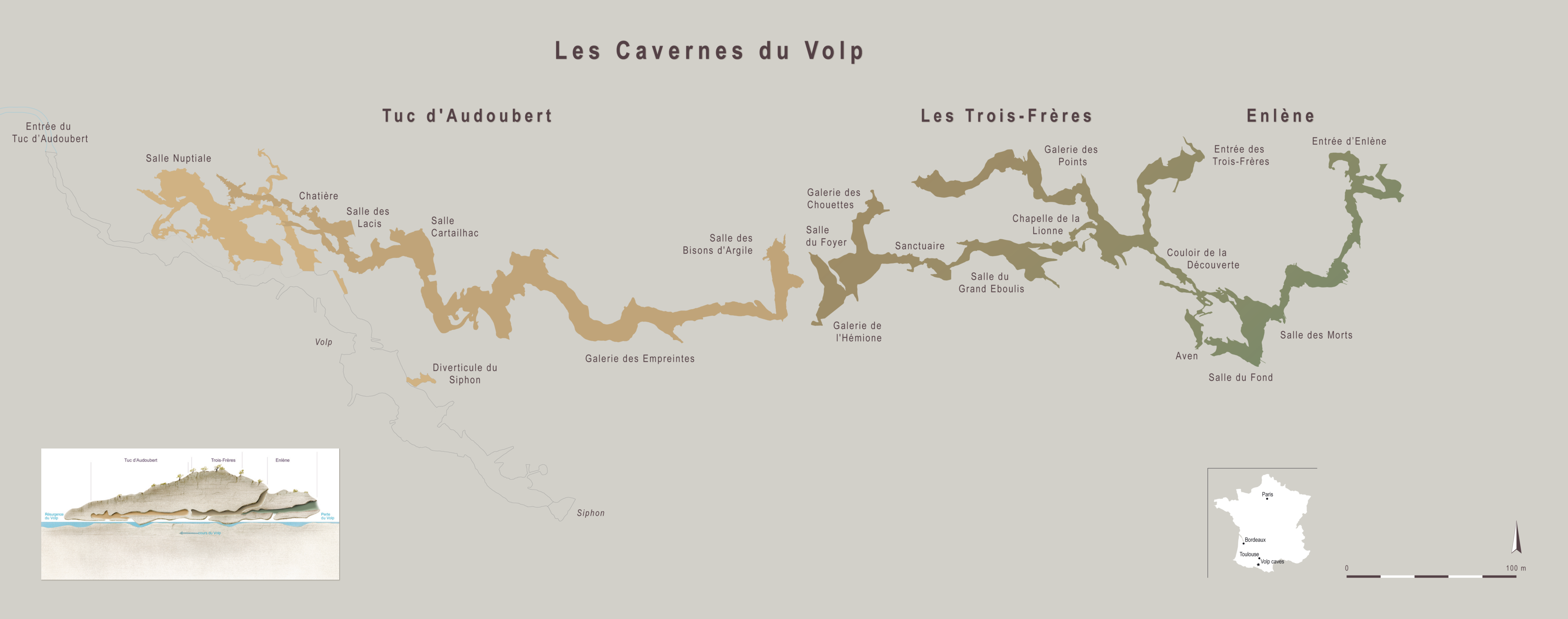
The Volp Caves - Contextualising Paleolithic Rock Art
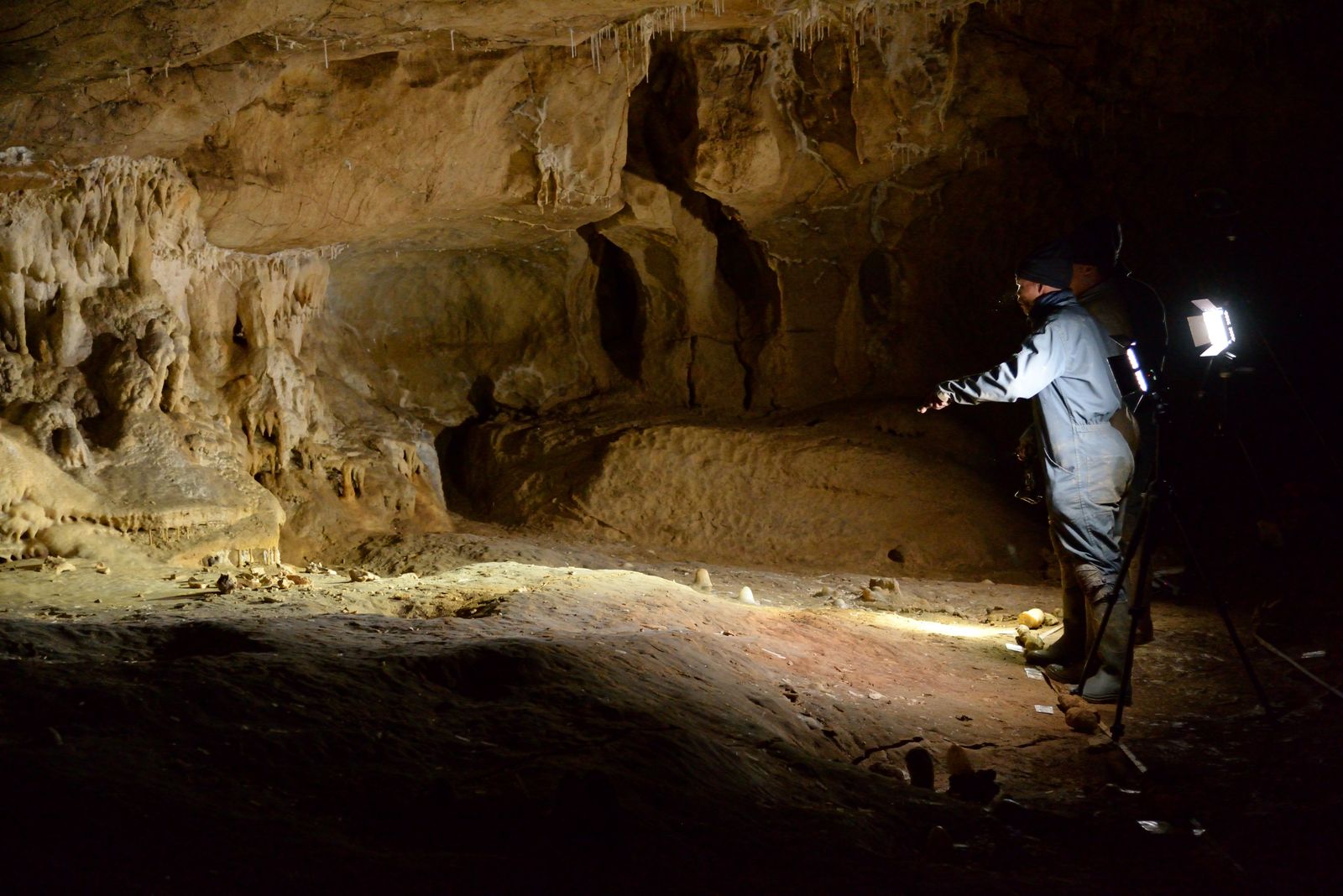
Enlène, Trois-Frères and Tuc d'Audoubert, form the Volp caves and are located in the municipality of Montesquieu-Avantès (Ariège), in the foothills of the Pyrenees. The Volp caves are a prime example of the use of Ice Age caves with paintings and their integration into the settlement and land use patterns of the time.
Spatial analyses of the archaeological finds and findings in these multi-layered image caves will be used to reconstruct the dynamic processes that led to their deposition. In addition, attempts will be made to identify the function(s) of the Volp caves in the regional subsistence system of the Magdalenian hunter-gatherer communities. For further information about the Volp project see its website or more project infos in this database.
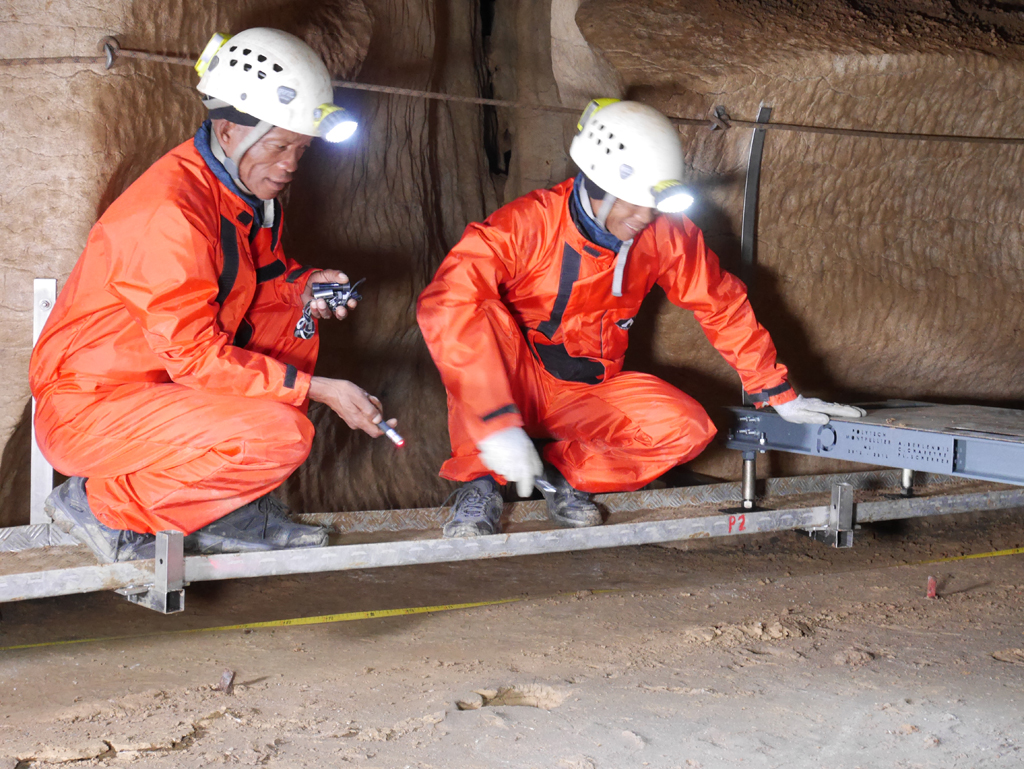
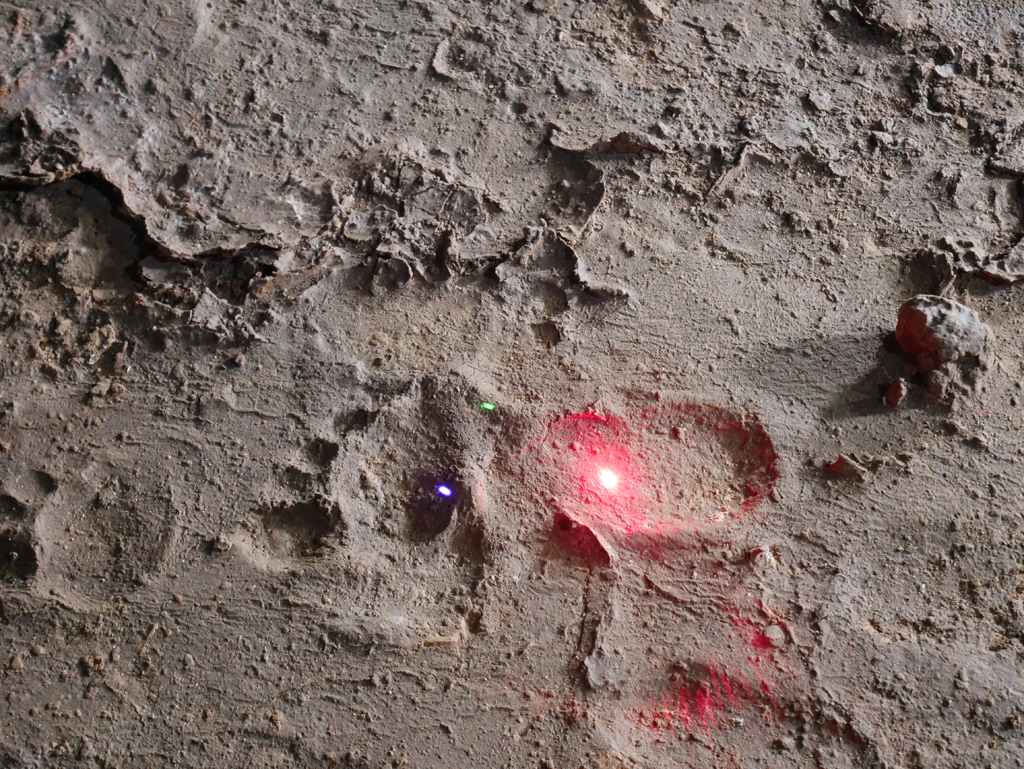
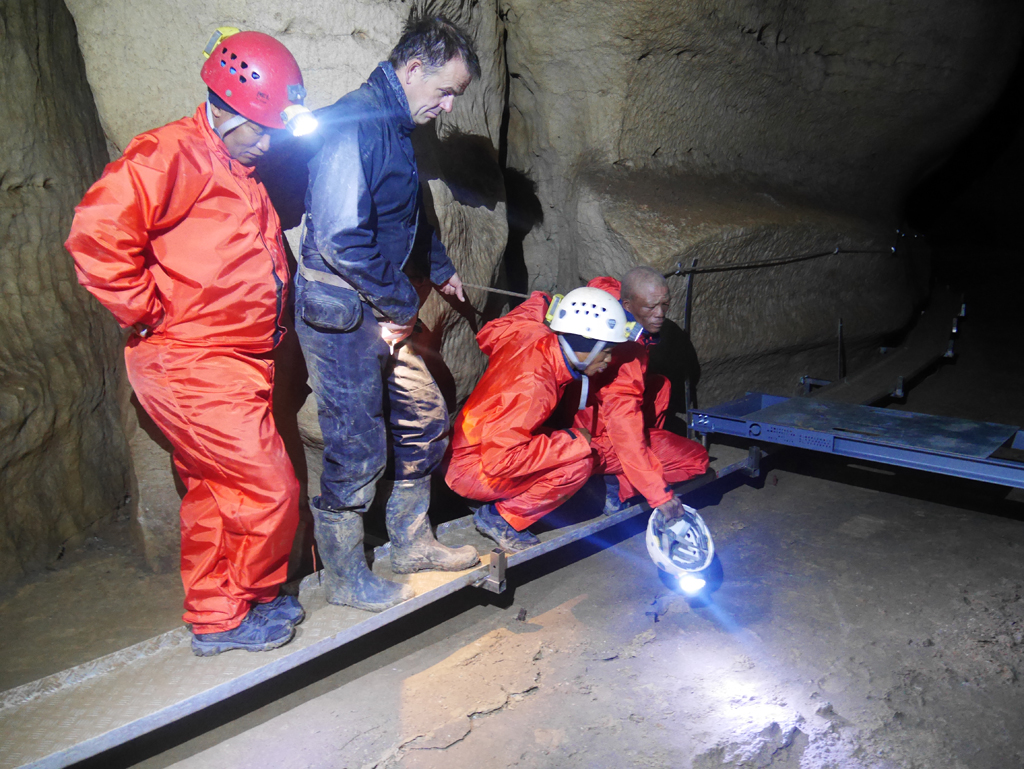
Since the end of the last ice age, humans have left behind not only rock paintings in caves, but also their own imprints in the plastic substrate. Such imprints of feet and hands have been known for over 100 years and have been studied using traditional anthropological methods of the Western scientific canon. However, the original ability of humans to interpret such tracks has never been included in this canon as a scientifically fruitful method. Today, only a few people still possess this knowledge and the associated skills. These include the experienced hunters of the Ju/hoansi (‘Bushmen’) from the Kalahari (Namibia).
Mesolithic human footprints as semantic data
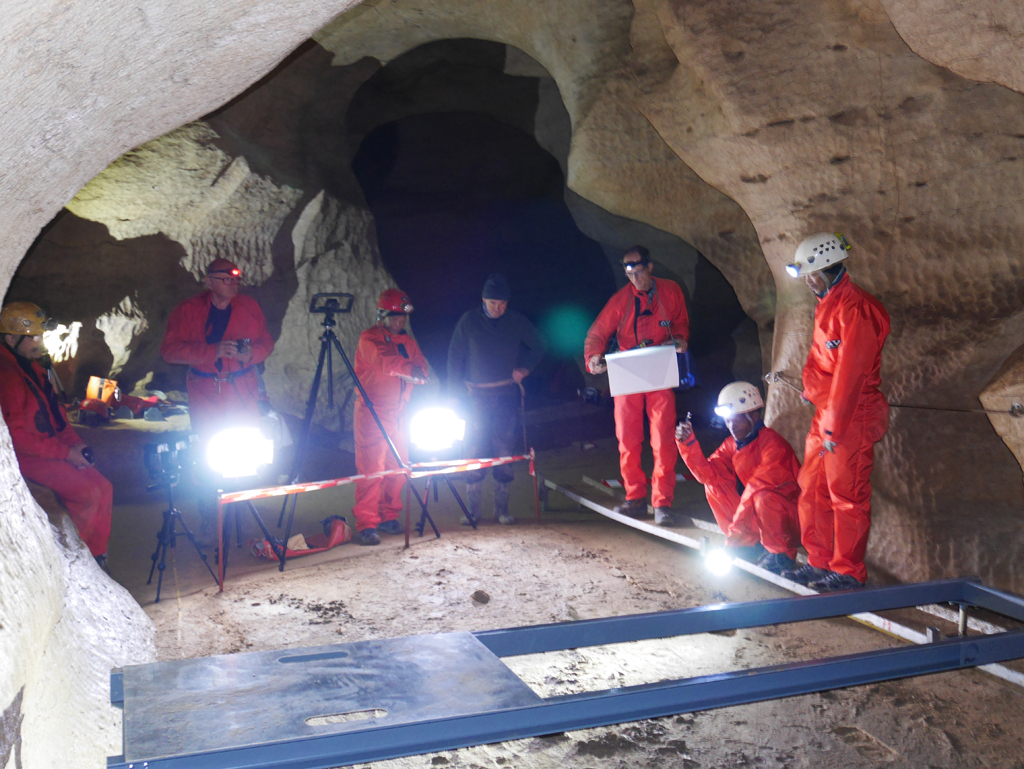
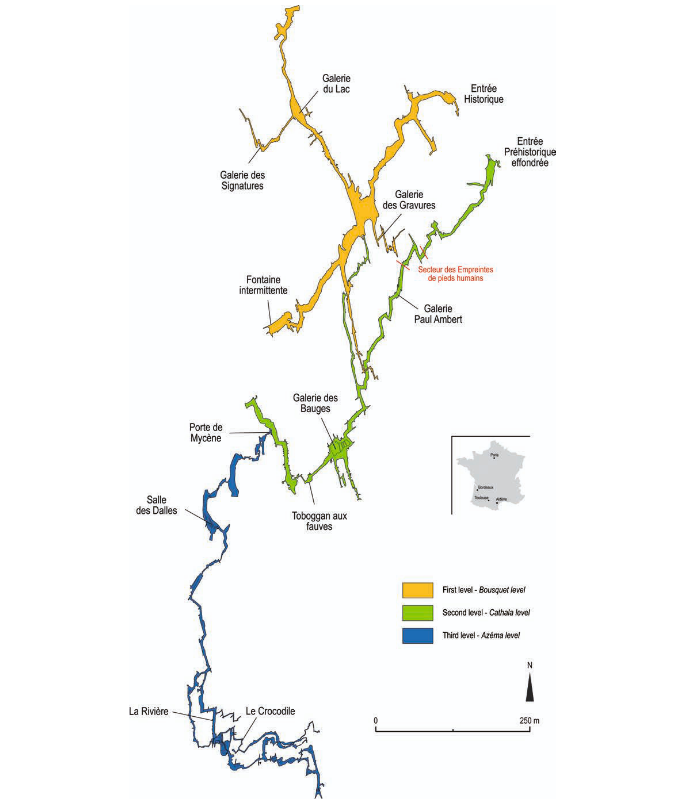
As a part of the multidisciplinary project "The Volp Caves" the mesolithic footprints of Aldène and other caves have been studied in 2018 by indigenous ichnologists from Namibia. Further details and links can be found here.
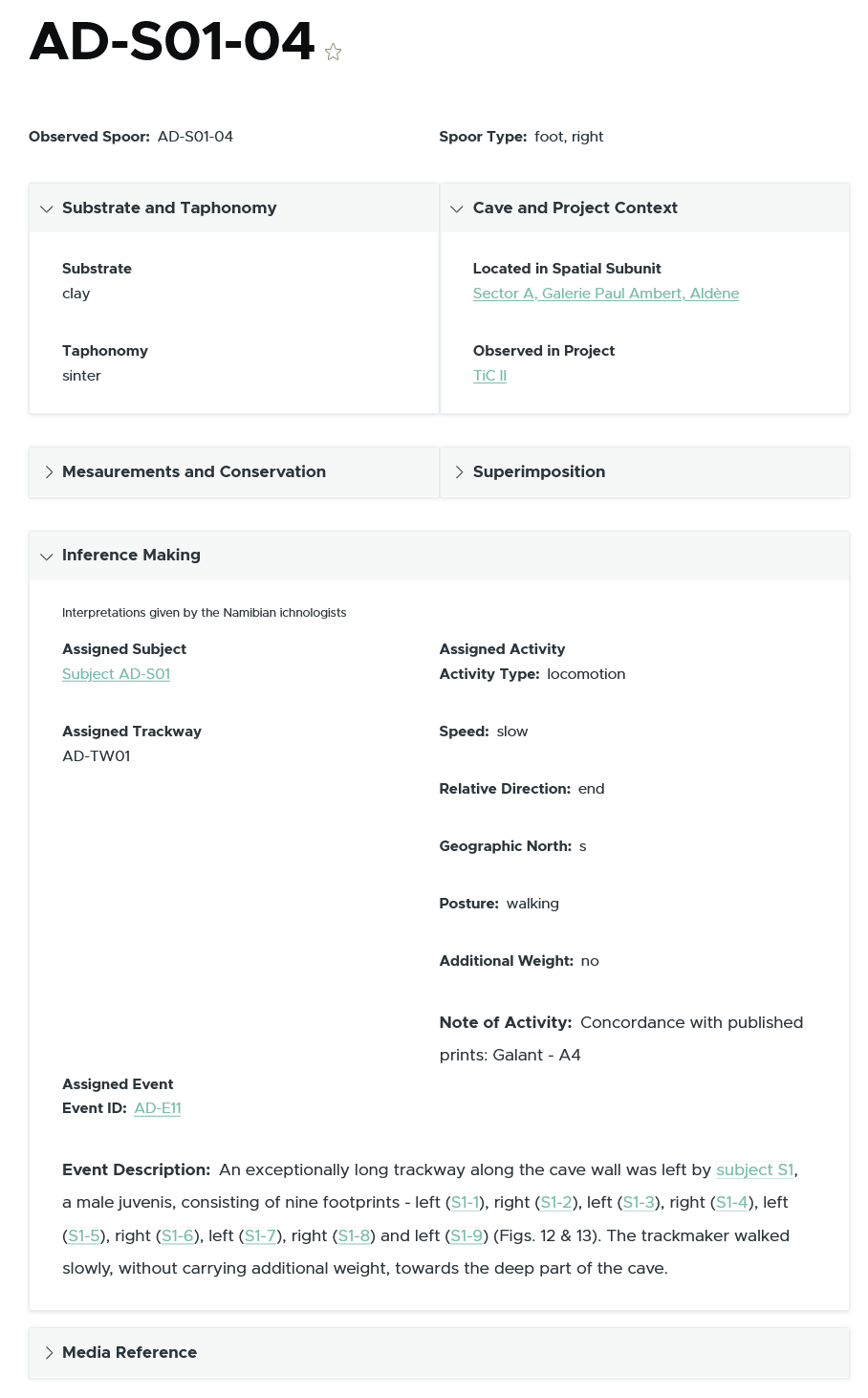
The data about the analysis of the mesolithic human footprints have been enriched semantically by means of CIDOC CRM, an ontology for cultural heritage. The Aldène footprint dataset together with the article documenting the research and its results (pdf download link) was the starting point for the development of the data model. The Aldène test system can be accessed here. Once well-proven the footprint data of Tuc d'Audoubert, Niaux and Pech Merle was integrated as well. Start navigating human footprints in caves here. For the technical documentation see also the menu item Docu.
| 
|
Further Data Access
Go to the SPARQL endpoint for SELECT and ASK queries. Or find the semantic data dump published on Zenodo in the list of publications. The licence for the use of the semantic data is CC BY-SA.
